 Skip to content
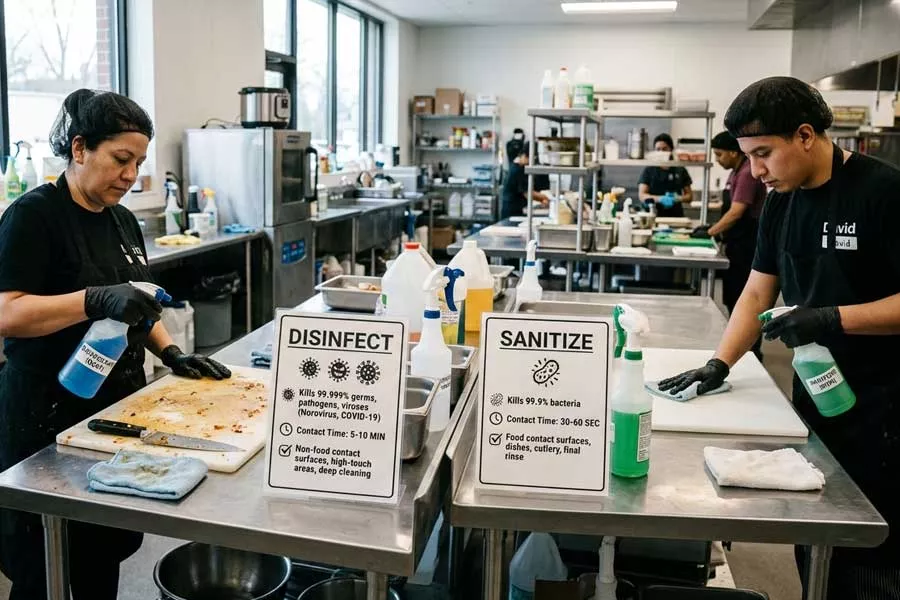
A clean environment is a crucial aspect of health and safety. Business, school, hospital, and office buildings rely on cleanliness daily. Many people, however, interchange the words disinfect and sanitize in their context. They are all associated with cleanliness, but not the same.
It’s important to know the difference so they can select the right strategy for the right context. Certain areas require only basic germ reduction, others, more intensive treatment. Hence, by using the appropriate process, hygiene is enhanced, and individuals are adequately protected from potentially harmful microorganisms.
Professional cleaning crews usually employ both methods. Furthermore, when the “best practices” of cleaning are brought together, the result is safer and healthier environments.
Disinfect vs. Sanitize: What’s the difference?
Sanitizing helps to reduce the level of germs on surfaces to safer levels. Kills bacteria and other microorganisms to public health standards. But not all harmful organisms are killed by sanitizing.
Disinfecting works differently. It has more potent chemicals that can kill many germs on surfaces. So disinfecting is more effective against bacteria and viruses.
The main difference involves the level of germ control. The difference between sanitizing and disinfecting is that sanitizing reduces the amount of contamination, while disinfecting is designed to kill a greater proportion of organisms.
Sanitizing is used in less hazardous environments. Disinfecting typically becomes a requirement in higher-risk areas.
How Sanitizing Works
Sanitizing gets rid of microorganisms to acceptable levels for health standards. Does not kill 100% of germs. Rather, it reduces their appearance considerably.
Products are frequently used in the process for food preparation areas, schools, offices, and public spaces. Furthermore, sanitizing products have lower levels of harsh chemicals than disinfectants.
Sanitization involves a number of actions:
- Reduces bacterial populations
- Promotes the maintenance of everyday hygiene
- Assists in keeping public areas safe
- Controls contamination levels
- Helps to keep common areas cleaner
Also, sanitizing is effective on surfaces that are touched often. Areas such as door handles, desks, tables, and waiting areas may need to be routinely sanitized.
How Disinfecting Works
Disinfecting involves the use of more potent chemical products that have the ability to destroy harmful microorganisms. The process is aimed at the germs that survive cleaning, where dirt is visible.
Active ingredients in disinfectants are chemicals that destroy bacteria and viruses. Thus, they offer greater protection in environments with high standards for hygiene.
Disinfecting commonly includes these steps:
- Clean up dirt and debris before removing it.
- Apply the disinfecting product
- Keep surfaces wet for the recommended times
- Avoid applying to wet surfaces
Disinfecting on a regular basis is usually the case at many health care facilities, since patients are at higher risk of contracting certain diseases.
At Summity Cleaning Services, we know that choosing the right one can impact cleanliness and safety results in professional cleaning settings.
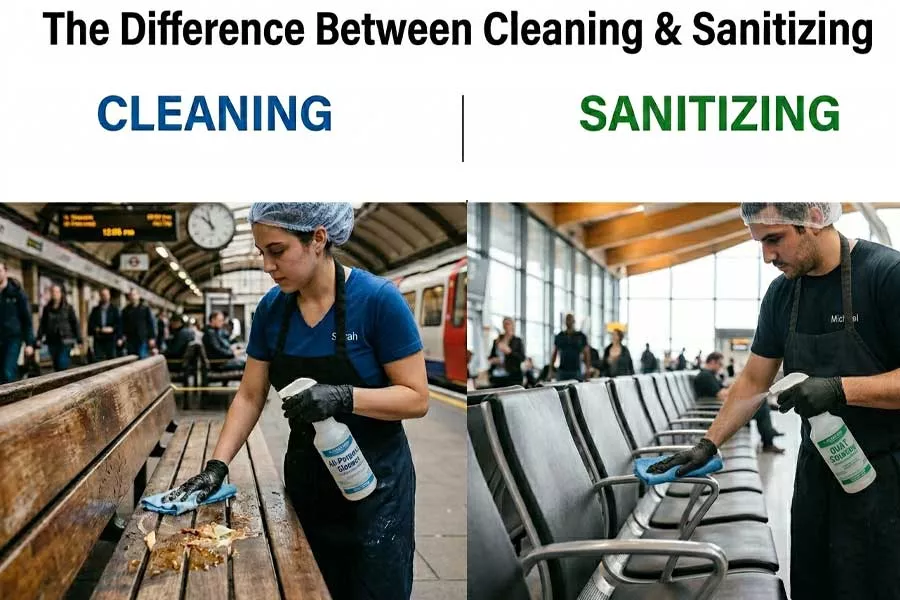
The Difference Between Cleaning & Sanitizing
Cleaning is also confusing with sanitizing. There are, however, different processes at work. Cleaning will get rid of visible dirt, dust, spills, and debris from surfaces. Regular cleaning jobs can be done with soap and water. But cleaning may not eliminate microorganisms.
Sanitizing is the process of reducing germs following the cleaning process.
An easy comparison:
Cleaning
- Eliminates dirt and grime
- Improves appearance
- Clearly uses soap/detergent
- Applies and prepares surfaces for subsequent use.
Sanitizing
- Lowers germ levels
- Supports safer conditions
- Reduces contamination risks
- Improves hygiene standards
So often, cleaning is the first step before sanitizing and disinfecting.
Why Both Are Necessary in Healthcare
Very high cleaning standards are needed in healthcare environments. Patients’ immune systems are often compromised. As such, there is no single process that can be relied on by healthcare facilities.
Cleaning will get rid of visible contamination. Every day, microbial levels are reduced by sanitizing. Disinfecting kills more bad guys. When used together, these methods provide greater protection.
Both are used in healthcare facilities because:
- Patients are more susceptible to being infected.
- Medicines and equipment must be kept in good hygiene.
- Shared areas are overused.
- Germ transmission happens quickly
- A safe work environment must be provided for staff.
Also, the responses are different in each of the areas. Frequent cleaning of waiting rooms might be necessary. More intensive disinfecting measures may be required in surgical areas.
Consistent cleaning protocols are essential for hospitals, clinics, and healthcare offices to keep the environment safe.
Best Practices for Disinfecting & Sanitizing in Medical Settings
In the medical environment, attention needs to be taken to cleaning procedures. Small mistakes can heighten contamination risks. For this reason, facilities have to adhere to strict guidelines.
Several best practices improve results:
Clean before disinfecting
Clean off any obvious dirt. The presence of surface debris may hinder the effectiveness of disinfectants.
Use approved products
Always choose products that are made for a healthcare setting.
Follow contact time directions.
There should be a sufficient contact time for disinfectants.
Emphasize high-touch surfaces. Pay attention to high-touch surfaces.
Be mindful of:
- Door handles
- Bed rails
- Light switches
- Waiting room chairs
- Medical equipment
- Train staff consistently
The quality of cleaning is enhanced, and errors are minimized due to staff education.
Use protective equipment
When working with a material that poses a risk of exposure, gloves and safety equipment are used to minimize risk. In addition, there should be periodic audits of cleaning processes in facilities. New techniques to ensure better infection control measures.
Healthcare environments are still in a constant state of change. Hence, proper sanitizing and disinfecting procedures are still vital for patient safety and public health.
We are committed to solving your cleaning problems at Summity Cleaning Services by providing sensible and efficient cleaning solutions to ensure healthier and safer environments. We know that good hygiene begins with good methods and with paying attention to detail.
Frequently Asked Questions
Should surfaces be cleaned before disinfecting them?
Yes, cleaning removes dirt first and helps disinfecting products work more effectively on surfaces.
Where is sanitizing commonly used daily?
Sanitizing commonly occurs in offices, schools, restaurants, and shared public spaces for hygiene purposes.
Why do hospitals use disinfecting regularly?
Hospitals use disinfecting because patients face greater infection risks and require safer healthcare environments.
Can cleaning alone remove harmful germs completely?
No, cleaning removes dirt but may not eliminate harmful microorganisms from surfaces effectively.
