 Skip to content
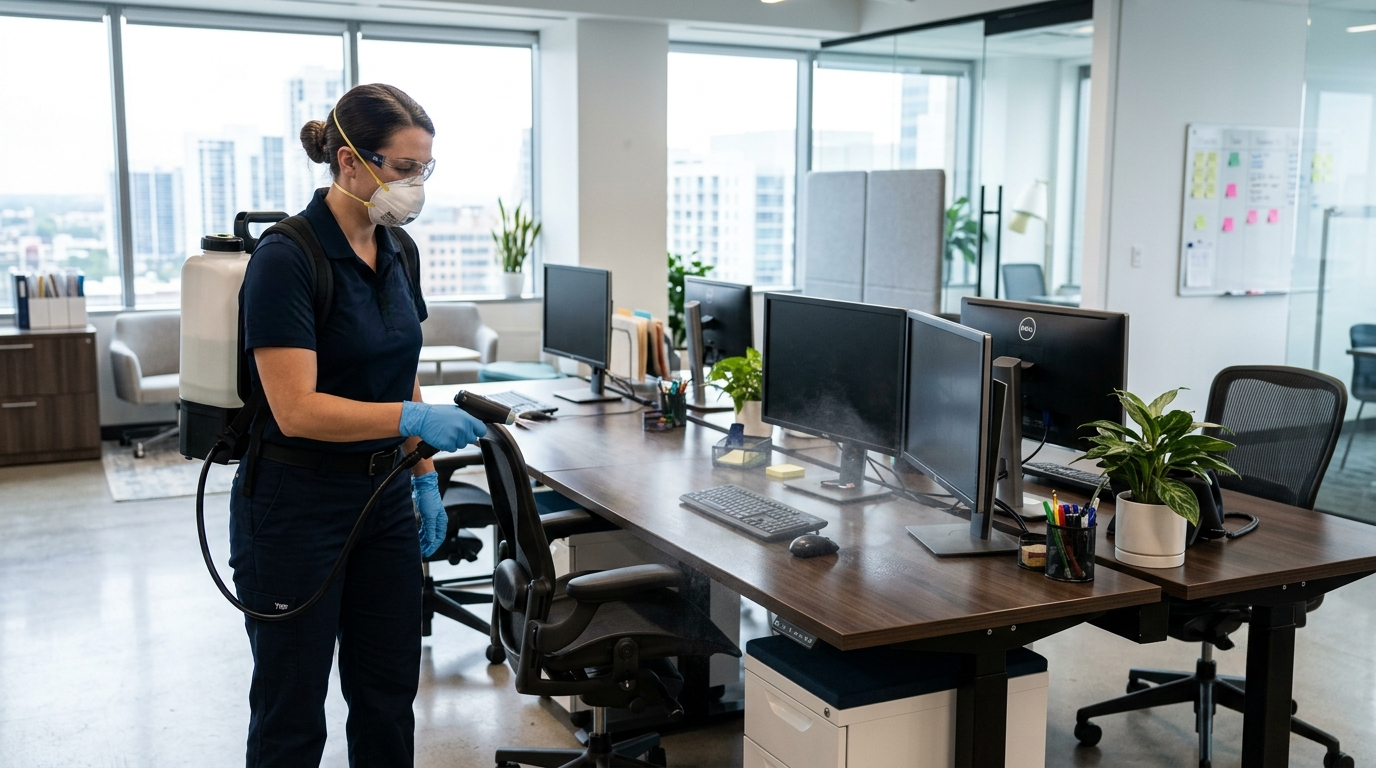
A clean office does more than look professional. It has the potential to keep your team safe, boost productivity, and foster a healthier environment. Every day, employees touch desks, keyboards, door handles, and shared equipment. As a result, germs can spread quickly.
Regular cleaning removes dust and dirt. However, disinfection goes deeper. It is effective against harmful bacteria and viruses on surfaces. Hence, office disinfection services have a significant contribution to play in the safety of workplaces.
Businesses can’t turn a blind eye to hygiene standards today. Employees expect clean workplaces. You also let the client see how well you take care of your office. Therefore, it is a good business investment to take advantage of professional disinfection.
Why is office disinfection important?
High-touch surfaces are common in the workplace. During the day, these areas accumulate germs. Illness may spread fast if it is not properly disinfected.
Common high-touch surfaces are:
- Door handles
- Elevator buttons
- Shared desks
- Keyboards and mice
- Breakroom counters
- Coffee machines
- Conference tables
- Restroom fixtures
Just one sick worker can impact multiple staff members. This can lead to higher rates of absenteeism. This can slow productivity and lower team performance.
A clean office reduces these risks. It provides peace of mind, more importantly, for employees. Workers and staff are more concentrated when they feel safe.
Office disinfection matters because it helps:
- Reduce germ transmission
- Lower sick days
- Improve indoor hygiene
- Support employee wellness
- Put on a professional appearance
Additionally, cleaner areas can have a positive impact on people’s morale. It’s no surprise that people feel better when they are in clean and fresh places.
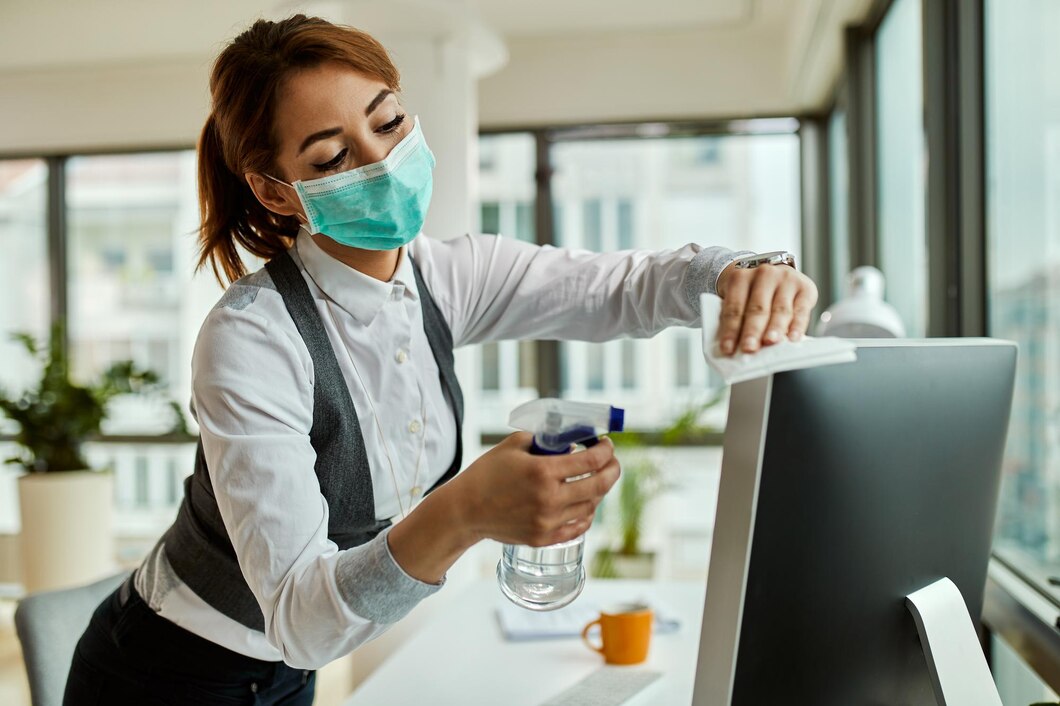
How to Implement an Effective Disinfection Plan
Consistency is key to an effective disinfection plan. The cleaning should be random and not insufficient. However, there is a need for a structured approach for businesses.
So here are some key things to take into account:
1. Identify High-Risk Areas
Start by identifying some surfaces that are touched often. These areas require daily maintenance.
Examples include:
- Entry points
- Shared workstations
- Kitchens
- Meeting rooms
- Restrooms
This aids prioritization of clean-up efforts.
2. Create a Cleaning Schedule
Consistency matters. So, make a definite time plan.
Your plan could feature:
- Daily surface disinfection
- Weekly deep cleaning
- Monthly full sanitization
Missed areas are minimized by scheduled cleaning.
3. Use Approved Disinfectants
Not all cleaners have the power to effectively kill germs. Use disinfection products.
Look for solutions that:
- Kill bacteria
- Eliminate viruses
- Work on a variety of surfaces
- Operate on various surfaces.
- Dry quickly
This will provide increased protection.
4. Train Staff on Hygiene Practices
Disinfection is at its best when there is everyone’s help.
Encourage employees to:
- Wash hands often
- Sanitize desks
- Cough and sneeze into your elbow.
- Avoid sharing personal items.
This leads to improved hygiene in the workplace.
5. Hire Professionals
Professional cleaners employ tried and tested techniques. They additionally understand the very best products. In addition, any hard-to-reach areas are disinfected by experts. This results in improved outcomes.
The Business Benefits of Professional Disinfection
There are many businesses that clean inside their own premises. But professional disinfection provides more comprehensive protection.
These are the key advantages:
Reduced Employee Absences
The fewer the germs, the fewer the illnesses. This means that fewer employees miss work. This ensures smooth operation of operations.
Improved Productivity
If employees are healthy, they work better. They remain attentive and alert. This means that productivity is likely to increase.
Better Brand Reputation
Clients notice cleanliness. Trust is established in a clean office.
People tend to form their first impression of a business based on its surroundings. Thus, a clean office makes a positive impression.
Meeting Health Standards
There are many industries that practice hygiene rules. Professional Disinfection can help meet those standards. This decreases compliance threats.
Cost Savings
Outbreaks are more expensive than prevention. Take into account the expenses of:
- Sick leave
- Lost productivity
- Emergency cleaning
- Business interruptions
These costs are avoided by professional disinfection.
The Role of Advanced Disinfection Solutions
The technology of cleaning has come a long way. New disinfection techniques are more effective. The old-fashioned wipe is still important. Advanced solutions, however, provide coverage to more surfaces.
Some of the most popular advanced solutions are:
Electrostatic Spraying
In this method, charged disinfectant particles are sprayed. The particles adhere evenly to surfaces. Thus, there is a considerable improvement in coverage.
Benefits include:
- Fast application
- Better surface coverage
- Less product waste
UV-C Light Disinfection
Microorganisms are destroyed through UV-C technology with light.
It works well for:
- Offices
- Medical spaces
- Shared rooms
Furthermore, it is chemical-free and disinfects.
Fogging Systems
Fogging is the application of disinfectant in fine mist. This can be used to sanitize larger spaces in a hurry.
Benefits include:
- Wide coverage
- Efficient treatment
- Improved corner reach
These solutions enhance the safety of the workplace. However, it is advised that trained professionals handle them.
Common Misconceptions About Office Disinfection
There are some misconceptions about disinfecting in the office. These myths can result in mistakes in proper hygiene.
Misconception 1: Cleaning and Disinfection Are the Same.
This is false. Cleaning gets rid of any obvious dirt. The disinfection process eliminates harmful germs. Both matter.
Misconception 2: Once a week, cleaning is sufficient.
Not always. Frequent Disinfection of high-traffic areas is necessary in high-traffic workplaces. Germs multiply quickly. So, cleaning once a week can’t necessarily ensure that your team is safe.
Misconception 3: “DIY Products Work Just as Well
Household cleaners help. They may not be able to offer commercial-level protection, though. Professional products are typically more effective.
Misconception 4: Disinfection is only necessary during the “Sick Seasons”.
Germs spread year-round. There is a risk of flu season, but protection is important all year.
People also tend to believe that Disinfection is too costly. Another misconception is that Disinfection is too expensive.
Misconception 5: Disinfection Is Too Expensive
When it comes down to it, prevention is cheaper in the long term. The benefits of the long term can be more than worth the investment.
Elevate Workplace Health with Professional Disinfection
A safe office starts with proactive care. Clean spaces make healthy teams. They also engender confidence amongst the employees and visitors. Disinfecting your professional office protects your office from unseen threats. It decreases the spread of germs, boosts morale, and helps ensure business continuity.
Furthermore, new technology provides quicker and more consistent security. This enhances the value of professional services even more. Do not wait for illness to disrupt your business. Instead, create a healthier workplace today.
For reliable cleaning and professional disinfection services, trust Summity Cleaning Services. They have a professional team that will keep your office clean, safe, and on track for success.
FAQs On Office Disinfection Services
Is disinfection different from regular cleaning?
Yes, cleaning removes dirt while disinfection kills harmful bacteria, viruses, and germs on surfaces.
Can office disinfection reduce employee sick days?
Yes, regular disinfection lowers germ spread and helps reduce workplace illness significantly overall.
Are professional disinfection services worth it?
Yes, professionals provide deeper cleaning, better coverage, and stronger germ protection for offices.
Which office areas need frequent disinfection?
Desks, door handles, keyboards, restrooms, breakrooms, and shared equipment need regular disinfection daily.
